 Jayk1@gmail.com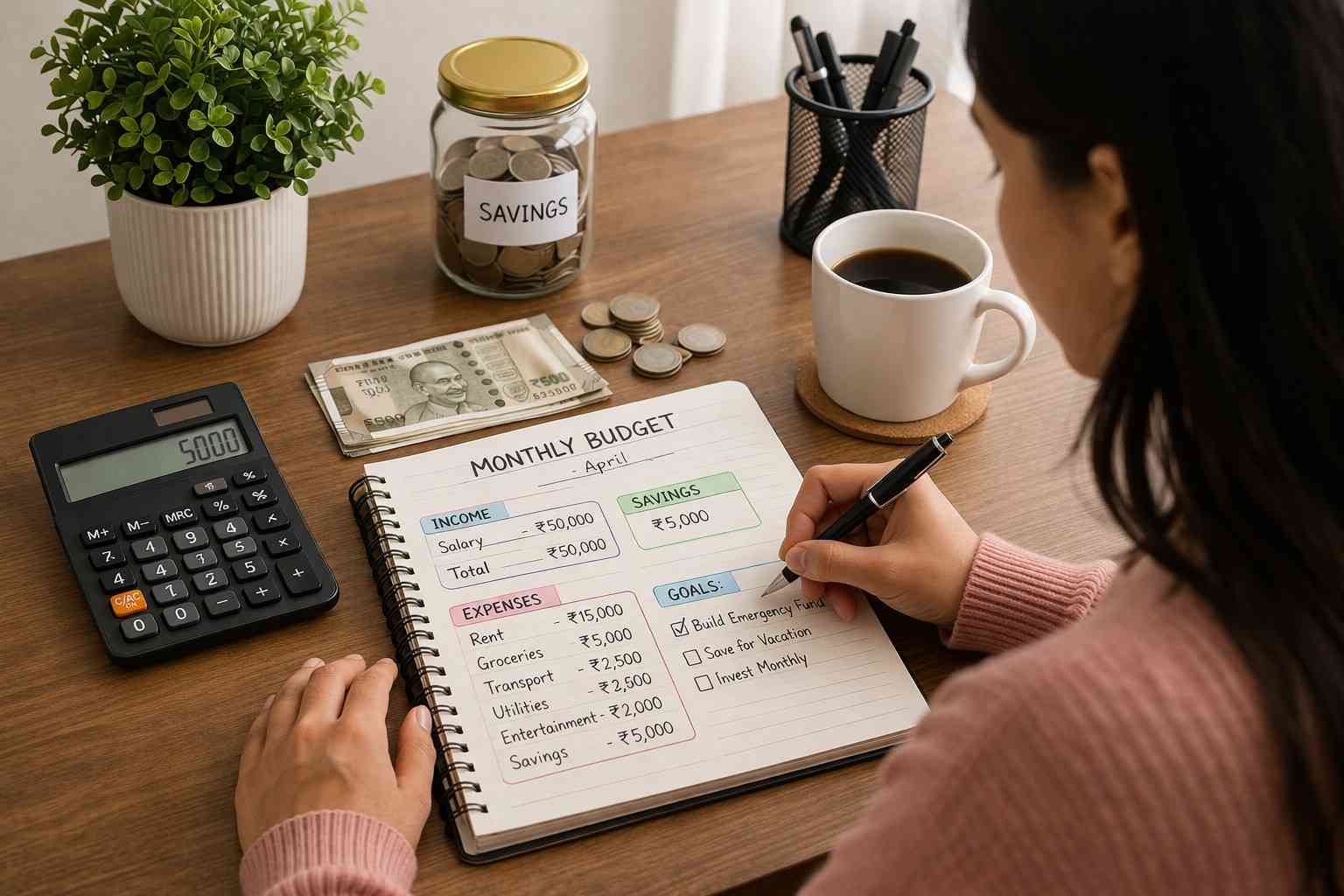
Introduction: How to Stick to a Budget Every Month
Budget. For a lot of people, that word alone triggers a specific feeling — restriction, deprivation, saying no to things you actually enjoy. Like being put on a financial diet where everything fun is off the menu.
That feeling is exactly why most budgets fail. Not because the numbers were wrong. Not because the person lacked discipline. But because the budget felt like a cage instead of a plan.
Learning how to stick to a budget every month isn’t really about willpower or cutting everything you love. It’s about building a system that works with your life, not against it. A budget you genuinely stick to looks very different from a budget that exists on paper and gets abandoned by the 12th of the month.
This guide covers the real strategies — practical, honest, experience-backed — for making monthly budgeting something that actually lasts.
Why Most People Struggle to Stick to Their Budget
Before getting into the solutions, it’s worth understanding why budgets fall apart so consistently — even for people who genuinely want to improve their finances.
The most common reason is that the budget was built around an ideal version of life, not real life. Someone decides they’ll spend ₹2,500 on food this month when they’ve been spending ₹6,000 for the past six months. That’s not a budget — that’s wishful thinking with a spreadsheet attached.
The second reason is emotional spending. Stress, boredom, celebration, anxiety — humans use purchases to manage feelings, and no spreadsheet stops that on its own. A budget that doesn’t account for emotional spending patterns will get blown by them repeatedly.
The third reason is simply forgetting. Life is busy. Without a habit or system that keeps the budget in front of you regularly, it slips away and the month goes by on autopilot.
Understanding how to stick to a budget every month means addressing all three of these — not just fixing the numbers.
Start With a Budget That Reflects Real Life, Not Ideal Life
The foundation of how to stick to a budget every month is building something you can actually live inside. That starts with honesty at the setup stage.
Go through your last three months of bank statements. Find your actual average spending in each category — food, transport, utilities, entertainment, everything. Don’t adjust the number because it looks too high or feels embarrassing. Write the real number.
Your budget should start from where you actually are, not where you think you should be. Once you have an honest baseline, you can make small, gradual reductions in categories where you genuinely have flexibility. Cutting ₹500 from food this month is sustainable. Cutting ₹4,000 overnight is not.
A budget built on real numbers feels manageable because it is manageable. That manageability is what makes it possible to actually stick with month after month.
Build in a “Fun Money” Category — Non-Negotiable
Here’s the mistake that makes people feel restricted: building a budget with zero room for enjoyment.
No dining out. No movies. No spontaneous purchases. Nothing that isn’t strictly essential. This kind of budget lasts about two weeks before it breaks — because it’s not a sustainable way to live, and some part of you knows that from the start.
One of the most important principles of how to stick to a budget every month is giving yourself deliberate permission to spend on things you enjoy. Not unlimited permission — deliberate permission. A specific category with a specific amount.
Call it “fun money,” “personal spending,” or whatever feels right. Give it a realistic number — maybe ₹2,000 or ₹3,000, depending on your income. Then spend that money without guilt. On food you enjoy. On something you want. On whatever genuinely adds quality to your life.
When enjoyment is built into the plan, you stop feeling like the budget is working against you. That shift in feeling is underrated. It’s what makes the difference between budgets people maintain and budgets people abandon.
Use the “Pay Yourself First” Principle
Most people handle savings the same way: spend throughout the month, and save whatever happens to be left over at the end.
The problem is that something is almost never left. Life fills the available space — small purchases here, an unexpected bill there, and suddenly the month is over with ₹300 in the account.
Understanding how to stick to a budget every month includes understanding that savings needs to happen before the spending decisions start — not after. The moment your salary arrives, move your savings amount to a separate account immediately. Before bills. Before groceries. Before anything else.
Even if that amount is only ₹1,500 or ₹2,000 right now, the habit of separating it immediately is far more valuable than the amount itself. You learn to live on what remains. Your spending naturally adjusts to the available balance.
This single habit — savings first, spending second — is one of the most reliable answers to how to stick to a budget every month that actually holds up over time.
Set Up a Weekly Check-In Habit
A budget you only look at once a month isn’t a tool — it’s a historical record. You see what happened after it’s too late to change anything.
The most practical answer to how to stick to a budget every month is checking in with your budget weekly. Not to stress over numbers, but to stay oriented. Pick a consistent day and time — Sunday evening works well for most people — and spend ten minutes going through two things.
First, how much have you spent in each category so far this month? Second, how much is remaining in each category for the rest of the month?
That second question is where the value lives. If your food budget is ₹6,000 and you’ve spent ₹4,800 by the 18th, you know you have ₹1,200 left for 12 more days. That’s specific, actionable information. You can plan around it. Without the weekly check-in, you might not discover that number until the 30th — when it’s already a problem, not a warning.
Set a recurring reminder on your Android phone right now. Same day, same time, every week. Make it as automatic as possible.
Create a Buffer Category for Life’s Small Surprises
Even with a well-built budget, life sends things you didn’t plan for. A friend’s birthday dinner. A phone screen crack. A slightly higher electricity bill than last month. A last-minute travel cost.
These aren’t financial emergencies — they’re just normal life. But without a category for them, every small surprise feels like a budget failure. And repeated “failures” erode the motivation to continue.
One of the underrated strategies for how to stick to a budget every month is including a small miscellaneous or buffer category — even ₹1,000 to ₹2,000 — specifically for these situations. When something unexpected but minor comes up, you have a designated place to cover it without disturbing any other category.
This category isn’t for big emergencies — that’s what a proper emergency fund is for. It’s just a small cushion that absorbs normal life variability. Its presence keeps the rest of the budget intact when small surprises arrive — which they will, every single month without exception.
Understand Your Emotional Spending Triggers
Numbers alone don’t explain spending. Emotions do. And until you understand your personal emotional spending patterns, no budget — however well-designed — will hold up completely.
Most people have two or three specific emotional states that reliably lead to spending. Stress from work leading to food delivery orders. Boredom on weekends leading to online shopping. Social anxiety leading to expensive outings to avoid saying no to friends.
Take an honest look at your last month of transactions. Find the purchases that, looking back, you didn’t really need and wouldn’t have made on a calm, neutral day. Then ask what was happening emotionally when you made them. The pattern usually becomes obvious fairly quickly.
Knowing your triggers doesn’t eliminate them — but it gives you a moment of awareness between the feeling and the purchase. That pause is often enough to make a different choice. And recognizing that emotional spending is a normal human pattern — not a personal moral failing — makes it easier to address without self-judgment.
Use the 24-Hour Rule for Non-Essential Purchases
Impulse purchases are one of the most consistent ways budgets get derailed. The item looks appealing, the moment feels right, and the purchase happens before any rational evaluation occurs.
One of the simplest and most effective strategies for how to stick to a budget every month is the 24-hour rule: before any non-essential purchase above a certain threshold — say ₹1,000 or ₹1,500 — wait 24 hours before buying.
Add it to your wishlist, take a screenshot, write it down — whatever works. Then come back to it the next day.
Most of the time, the urgency is completely gone. The item that felt essential last night feels optional or even unnecessary the next morning. That time gap breaks the emotional momentum of impulse buying more reliably than any willpower-based strategy.
For purchases that still feel genuinely worth it after 24 hours, you can use your fun money category or plan it into next month’s budget deliberately. Either way, it becomes an intentional decision rather than a reactive one.
Automate as Much as Possible
Manual systems break down when life gets busy. And life always gets busy eventually. One of the practical answers to how to stick to a budget every month is reducing how much the system depends on you remembering to do things.
Set up automatic transfers on salary day. The moment your income arrives, scheduled transfers move money to your savings account, your emergency fund, and any goal-specific accounts automatically. You don’t have to remember, decide, or feel the loss of that money because it’s gone before you start spending.
Set up auto-pay for fixed bills where possible — rent, loan EMIs, insurance premiums, fixed subscriptions. Removing the manual step from these payments means they can’t be accidentally skipped or delayed.
The less your budget depends on daily active decisions, the more stable it becomes. Automation turns your financial plan into something that runs in the background — reliably, consistently, without requiring daily motivation.
Track Progress Toward a Goal, Not Just Expenses
One of the most powerful but underused strategies for how to stick to a budget every month is connecting your budget directly to something you genuinely want.
A budget that’s just about limiting spending feels restrictive. A budget that’s building toward something specific feels purposeful. That’s a completely different emotional experience of the same financial activity.
Pick one meaningful goal your budget is working toward right now. A specific emergency fund amount. A trip you’re saving for. Paying off a particular debt by a particular date. Something concrete and visible.
Track that goal’s progress somewhere you’ll see it regularly — a sticky note, a phone widget, a progress bar in your budgeting app. Every month you stick to the budget moves that number. Every month becomes evidence of progress rather than just another round of restriction.
For help setting up a budgeting structure that incorporates goal-based saving alongside everyday expenses, this guide on how to create a monthly budget plan in 5 simple steps walks through the process in a way that makes room for financial goals at every income level.
Handle Budget Failures Without Quitting
Every person who budgets consistently has had months where things went wrong. A category blew out. An unexpected expense hit. Emotional spending took over for two weeks. The budget got ignored entirely.
This is normal. It’s part of the process, not evidence that budgeting doesn’t work for you personally.
The key difference between people who eventually get financially stable and people who don’t is what happens after a bad month. People who succeed treat it as data — what happened, why it happened, what to adjust — and start fresh the next month. People who don’t succeed treat it as proof that they’re bad at budgeting and stop trying.
How to stick to a budget every month over the long term doesn’t mean having perfect months. It means having more good months than bad ones, and coming back after the bad ones instead of giving up.
Every month is a fresh sheet. Whatever happened in the last 30 days doesn’t carry forward unless you let it.
Revisit and Rebuild the Budget Seasonally
A budget built in January might not fit your life in July. Income changes. Expenses shift. Goals evolve. A budget that never gets updated gradually stops reflecting reality — and a budget that doesn’t reflect reality is very hard to stick to.
Every three to four months, do a proper budget review. Not just a weekly check-in — a full rebuild. Look at your income, your actual average spending in each category, and your current financial goals. Update the numbers to match where your life actually is right now.
This seasonal review keeps the budget accurate. And accuracy is directly connected to how realistic the budget feels — which is directly connected to whether you can actually maintain it.
For a broader look at how different budgeting approaches handle this kind of ongoing adjustment, this comparison of the best budgeting methods including zero-based and envelope systems gives useful context on finding an approach that stays relevant as your life changes.
The Role of Mindset in Long-Term Budget Success
Practical strategies matter — but mindset underlies all of them. The way you think about budgeting shapes whether it feels like a tool or a punishment.
People who successfully understand how to stick to a budget every month over years tend to think about budgeting as a form of self-respect — a way of making sure their money reflects what actually matters to them. Not a restriction on spending, but a direction for it.
That framing shift sounds small but it isn’t. “I can’t spend on that” creates resentment. “I’ve chosen to spend that money on something that matters more to me” creates ownership. Same financial reality, completely different emotional experience.
Budgeting isn’t about having less. It’s about choosing better. The more clearly you see that distinction, the easier the whole process becomes.
Final Conclusion: How to Stick to a Budget Every Month
Figuring out how to stick to a budget every month isn’t about becoming more disciplined or more financially sophisticated. It’s about building a system that’s honest enough to be realistic, flexible enough to be livable, and connected to goals meaningful enough to stay motivating.
Build the budget from your real numbers. Include money for things you enjoy. Save first before spending. Check in weekly. Automate what you can. Understand your emotional triggers. Bounce back after imperfect months. Review and update every season.
None of these strategies require a high income, a finance background, or perfect willpower. They require consistency and a willingness to keep showing up — imperfectly, honestly, month after month.
The budget isn’t the goal. The life you’re building with it is. Keep that in view, and sticking to it becomes a lot less about restriction and a lot more about direction.