 Jayk1@gmail.com
Introduction:
Healthy Relationship With Money: Most advice about personal finance skips the most important question. It goes straight to budgets, savings rates, and investment vehicles without ever pausing to ask: how do you actually feel about money? What happens in your body when you check your bank balance? What do you believe, at a gut level, about whether financial stability is genuinely available to you?
Those questions matter more than most people realize. Because the practical tools of personal finance — the spreadsheets, the apps, the strategies — only work consistently when the internal relationship with money is functional enough to support them. A healthy relationship with money isn’t a luxury or a vague aspiration. It’s the actual foundation that everything else gets built on.
This guide walks through what that relationship looks and feels like, why so many people are working with a damaged version of it, and — most importantly — how to start building something better beginning right now.
What a Healthy Relationship With Money Actually Means
The phrase gets used a lot, but it’s worth being precise about what a healthy relationship with money actually involves in practice. Because it’s not about loving money, obsessing over it, or achieving some state of constant financial peace.
A healthy relationship with money means you can look at your financial situation clearly — including the difficult parts — without spiraling into shame or shutting down into avoidance. It means money is a tool you use intentionally, not a source of constant background anxiety or a vehicle for emotional relief.
It means you make financial decisions from a grounded place rather than from fear, guilt, or the pressure of what other people seem to have. You can talk about money when it’s relevant without excessive discomfort. You can plan for the future without feeling like the exercise is pointless.
Notice that none of that requires being wealthy. A healthy relationship with money is available at any income level. It’s about the quality of the internal experience around money — and that quality can genuinely change, regardless of the numbers.
Why Most People’s Relationship With Money Is Already Complicated
Before talking about how to build something healthier, it’s worth being honest about why this is difficult for so many people. The relationship with money doesn’t start fresh when you get your first job. It starts in childhood, shaped by experiences and environments you had no control over.
The Family Blueprint
Your first and most powerful money education came from watching the adults around you. Not from anything they explicitly taught — from what you observed. How they talked about money, or didn’t. Whether money felt stable or precarious. What emotions surrounded financial decisions. Whether asking for things felt safe or shameful.
If money was a consistent source of stress, conflict, or instability in your home, you absorbed that as a template. The association between money and threat gets wired in early. And it shows up in adulthood as anxiety, avoidance, or the unconscious belief that financial stability is inherently fragile.
Building a healthy relationship with money as an adult often requires acknowledging that your starting point wasn’t neutral — and that the patterns you’re working with were learned, not chosen.
Cultural and Social Conditioning
Beyond family, the broader environment shapes money beliefs in ways that are difficult to untangle because they feel like common sense rather than conditioning.
Some cultural environments treat financial ambition as admirable. Others treat wealth with suspicion or associate financial struggle with moral virtue. Some communities make talking about money completely normal. Others treat it as deeply private, even shameful. These messages become part of how you relate to money without anyone explicitly delivering them.
A healthy relationship with money requires, at some point, examining which of your beliefs about money actually reflect your own considered values versus which ones are simply unexamined inheritances from your environment.
The Signs That Your Relationship With Money Needs Attention
Most people know, on some level, when something isn’t working. But the specific signs worth paying attention to aren’t always obvious.
Persistent Financial Avoidance
If you regularly avoid looking at your bank balance, putting off opening bills, not tracking where your money goes because the information feels threatening — that’s avoidance. And avoidance is one of the clearest signs that a healthy relationship with money isn’t yet in place.
Avoidance feels protective in the short term. But it means every financial decision gets made without accurate information. Problems compound unobserved. Small issues become larger ones simply because they were never addressed.
Emotional Spending Patterns
Spending as a response to stress, boredom, loneliness, or celebration — rather than from genuine need or considered choice — is another consistent signal. It doesn’t make someone a bad person. It makes them someone whose relationship with money has become entangled with emotional regulation in a way that costs real money and prevents real financial progress.
The Feeling of Never Having Enough
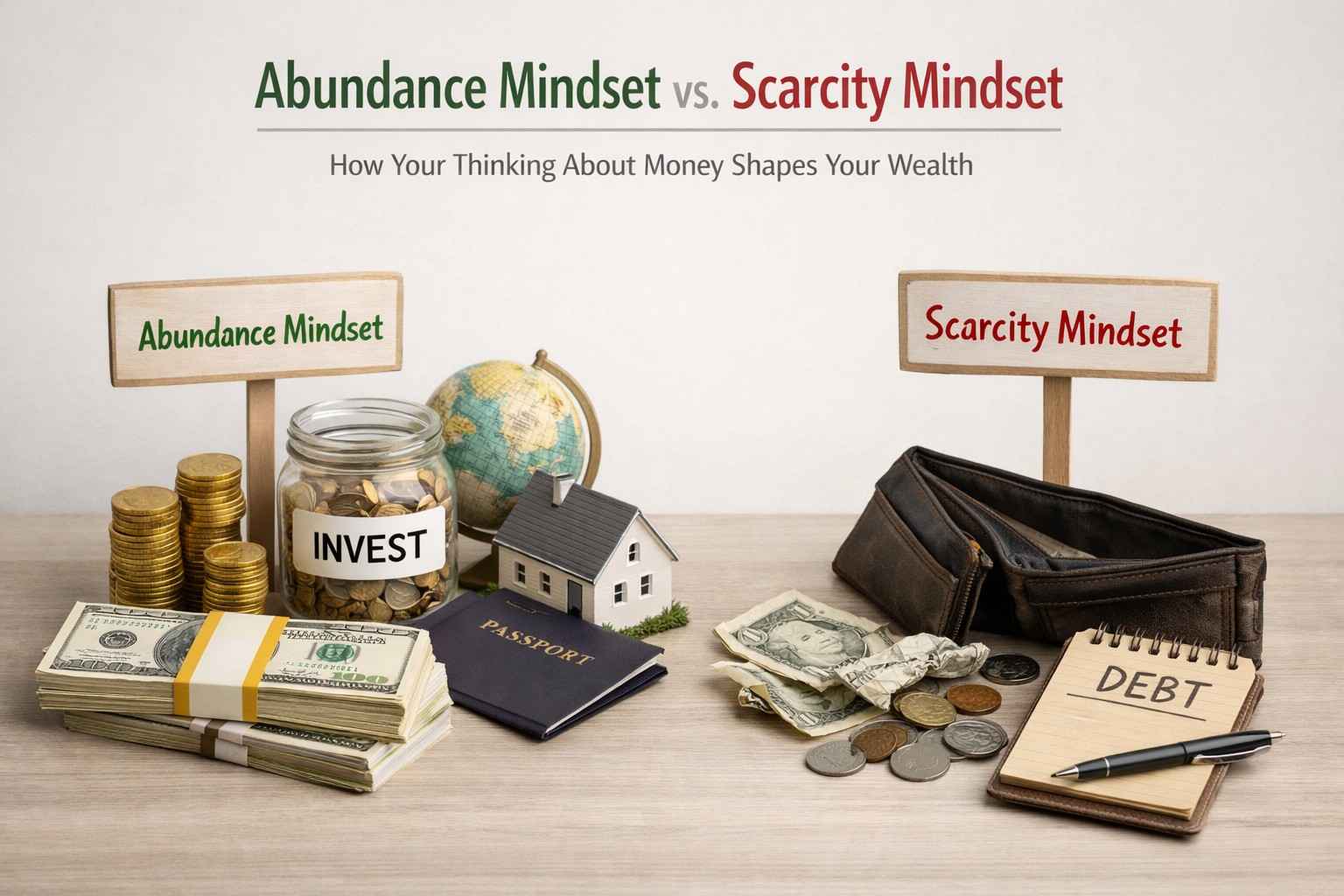
This is subtler. It’s the persistent sense that your financial situation is precarious even when it factually isn’t, or the experience of financial improvements feeling unreal or temporary. That feeling — independent of actual account balances — points toward a scarcity-based internal framework that’s inconsistent with a healthy relationship with money.
Shame Around Financial Reality
Feeling genuine shame about your income, your debt, your savings level, or your financial history — shame that prevents honest conversation and keeps financial problems invisible — is one of the most consistent barriers to building a healthy relationship with money.
Shame is different from concern. Concern motivates action. Shame triggers hiding. And you cannot address what you’re hiding from yourself.
Step 1: Develop Financial Awareness Without Judgment
The first concrete step toward a healthy relationship with money is building the habit of looking at your financial reality clearly and regularly — without attaching moral judgments to what you see.
Open your banking app on your Android phone right now. Look at your balance. Look at recent transactions. Don’t narrate it with “I’m so irresponsible” or “I can’t believe I spent that much on that.” Just look at it as information.
Numbers in a bank account are data. They tell you where things are, not who you are. That distinction — between financial facts and personal worth — is foundational to a healthy relationship with money and it takes genuine, repeated practice to internalize.
Schedule a weekly money check-in. Not a complicated audit — just ten minutes to look at what came in, what went out, and whether anything needs attention. Over weeks, this makes the act of looking at your finances feel normal rather than threatening. And normalcy is the precondition for clear thinking.
Step 2: Identify and Challenge the Beliefs That Are Running Things
Every person who struggles to build a healthy relationship with money has specific underlying beliefs doing damage beneath the surface. The work of this step is making those beliefs visible and then examining whether they’re actually true.
Take a few minutes with the notes app on your Android phone and complete these prompts honestly:
“Money means…” “People like me…” “Financial security is something that…” “When I have extra money I always…”
The answers reveal the operating system. Common damaging beliefs include: money is inherently corrupting, financial struggle is more virtuous than stability, people from my background don’t build savings, money is always temporary so there’s no point planning.
Once visible, each belief can be examined. Is this actually true? Where did it come from? Is there evidence that contradicts it? A healthy relationship with money requires a belief system that’s based on accurate current reality, not on inherited templates or past experiences that no longer apply.
Step 3: Build Small, Consistent Financial Behaviors That Generate Evidence
Here’s something that genuinely works: a healthy relationship with money is built partly through accumulating small experiences that contradict limiting beliefs.
Every time you save a small amount and it stays saved, you’re building evidence that you’re someone who can save. Every time you look at your finances without spiraling, you’re building evidence that financial information is manageable. Every time you make an intentional spending decision — even a modest one — you’re building evidence that you have agency over your money.
Start with something genuinely small. Transfer ₹200 to a separate savings account. Track one day’s spending. Pay ₹100 extra toward a loan. These actions aren’t transformative on their own. But they generate evidence — and your brain updates beliefs based on evidence.
This is the actual mechanism through which a healthy relationship with money develops over time. Not through reading the right thing once, but through repeated small experiences that tell a different story than the old one.
Step 4: Separate Your Self-Worth From Your Net Worth
This is perhaps the most psychologically important step in building a healthy relationship with money — and the one that most financial advice never mentions at all.
Your value as a person has nothing to do with your account balance. This statement sounds obvious when written plainly. But functionally, many people operate as if their financial situation is a measure of their worth, their intelligence, their discipline, or their deservingness of good things.
When that conflation is in place, every financial setback becomes a personal indictment. Every failed savings goal becomes evidence of character failure. And that level of emotional charge around money makes it genuinely harder to think clearly, plan effectively, or recover from mistakes.
A healthy relationship with money involves treating your financial situation as a practical circumstance — something with causes that can be understood and effects that can be addressed — not as a verdict on your worthiness.
This doesn’t mean financial decisions don’t matter. They matter enormously. It means the person making them matters independently of the decisions themselves.
Step 5: Build Healthy Money Conversations Into Your Life
Isolation around money — the experience of managing financial stress entirely alone, never discussing it with trusted people, feeling too ashamed to ask for guidance — is both a symptom and a cause of an unhealthy relationship with money.
Building a healthy relationship with money includes building the capacity to talk about it appropriately — with a partner, a trusted friend, a financial counselor, or a community of people at similar life stages.
This doesn’t mean sharing your account balance at a dinner party. It means having people in your life with whom honest financial conversation is possible. Where you can say “I’m struggling to stick to a budget” or “I don’t understand how this loan product works” without fear of judgment.
Those conversations make you less isolated with the challenges, more likely to get useful information, and more likely to normalize financial difficulty as something manageable rather than something shameful.
For practical guidance on having these conversations — particularly with a partner — this resource from NerdWallet on money conversations in relationships covers the practical and emotional dimensions in accessible terms.
Step 6: Use Financial Tools as Allies, Not Oppressors
People who don’t have a healthy relationship with money often experience budgets, tracking apps, and financial plans as punishments — evidence of what they’re not allowed to do, reminders of how far they’ve fallen short.
That framing makes the tools feel like enemies. And people avoid enemies.
A healthy relationship with money involves a completely different relationship with financial tools. A budget isn’t a restriction — it’s a record of what you’ve decided to do with your money. A spending tracker isn’t surveillance — it’s a source of information that helps you understand patterns. A savings goal isn’t a judgment — it’s a target that makes it easier to make consistent decisions over time.
This shift in framing is partly cognitive — consciously choosing to think about the tools differently. But it’s also built through experience. When a budget actually helps you reach a goal, it stops feeling like a cage and starts feeling like a useful instrument. Give it enough time, with enough consistency, to have that effect.
For a genuinely beginner-friendly approach to setting up a budget that supports a healthy relationship with money rather than undermining it, the Consumer Financial Protection Bureau’s budgeting resources offer a structured, non-judgmental framework worth working through.
Step 7: Celebrate Progress, Not Just Achievement
One of the quieter aspects of building a healthy relationship with money is learning to recognize and acknowledge incremental progress rather than waiting only for major milestones.
Saved ₹1,000 for the first time in months? That matters. Checked your bank balance every week for a month without avoiding it? That matters. Had one honest money conversation with your partner that didn’t turn into a fight? That matters.
The financial journey is long. Milestones like “debt free” or “six months of emergency fund” take time. If the only moments worth acknowledging are the big ones, you spend most of the journey in a state of perceived failure. That’s not sustainable.
A healthy relationship with money includes a genuine capacity to notice and feel good about smaller wins — because those smaller wins are what make the larger ones eventually possible.
Final Conclusion
Building a healthy relationship with money isn’t a single event. It’s a gradual process of developing awareness, examining inherited beliefs, generating new evidence through consistent behavior, and treating your financial situation with the same practical, non-judgmental attention you’d give any other area of life that needed improvement.
It starts with one honest look at your finances. One belief examined. One small action taken and followed through. One conversation had without shame.
A healthy relationship with money changes what’s possible financially — not because it magically improves your circumstances, but because it improves the internal conditions under which every financial decision gets made. And over time, better decisions in better internal conditions produce genuinely different results.
Start today. One small step. That’s all it takes to begin.