 Jayk1@gmail.com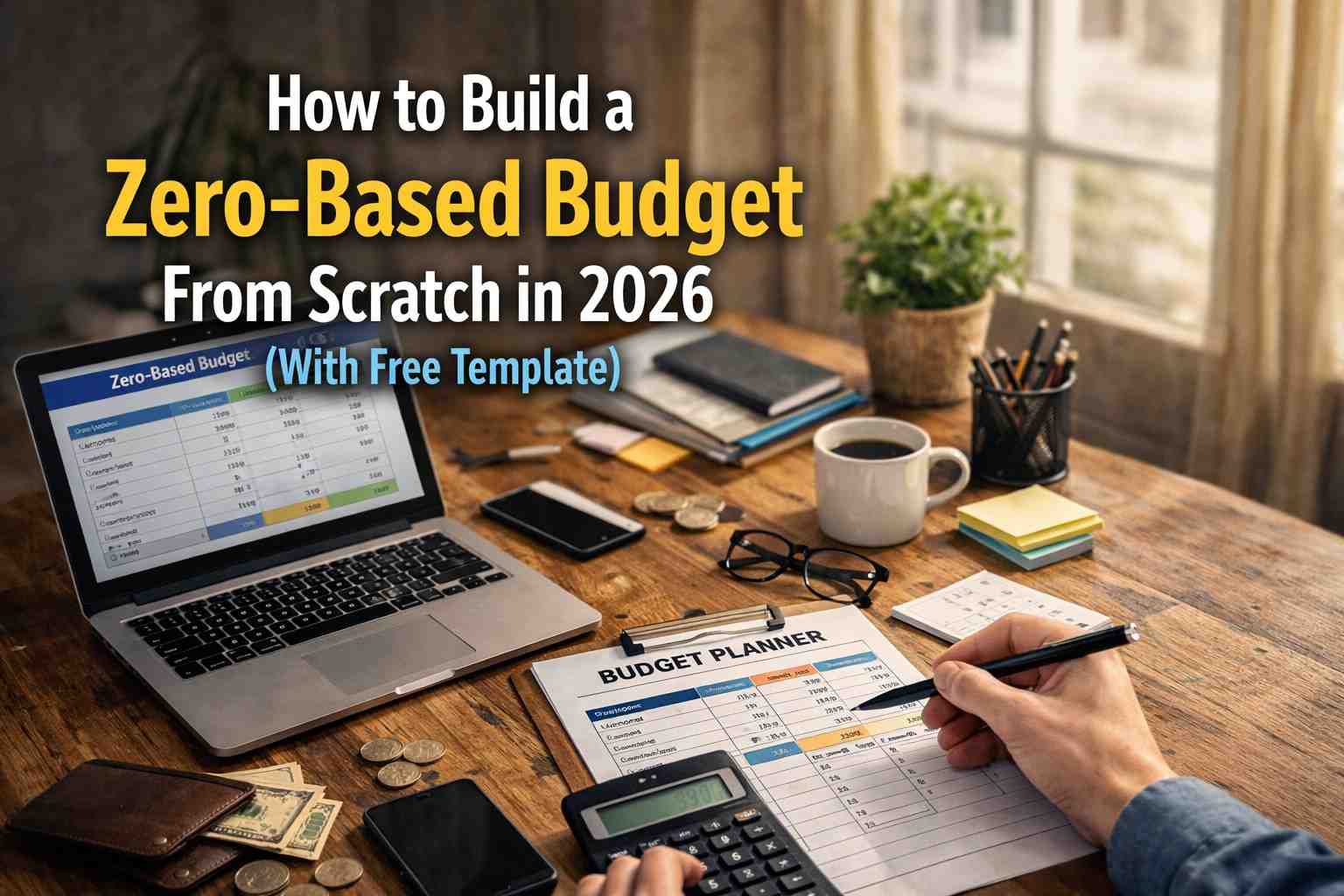
Introduction: Build a Zero-Based Budget From Scratch
Managing money has never been easy — especially when there’s more month left than money. If you’ve ever looked at your bank account at the end of the month and wondered where everything went, you’re probably not alone. That’s exactly the problem a zero-based budget is designed to solve.
How to build a zero-based budget from scratch is one of the most searched personal finance questions right now — and for good reason. It actually works. Not because it’s complicated, but because it forces you to be honest with every single rupee (or dollar) you earn.
This guide walks you through the whole process, step by step, from complete beginner to someone who genuinely understands where their money is going.
What Is a Zero-Based Budget, Really?
A lot of people hear “zero-based” and think it means spending everything you have, leaving nothing behind. That’s a common misunderstanding.
Zero-based budgeting means that every rupee of your income gets assigned a job — whether that job is rent, groceries, savings, or investments. At the end of the process, your income minus your expenses equals zero. Not because you spent it all, but because every part of it has a purpose.
Think of it like this: imagine you get ₹40,000 per month. Instead of just swiping your card whenever you need something, you sit down and deliberately tell each rupee where it should go. ₹12,000 for rent. ₹6,000 for food. ₹5,000 for savings. And so on — until ₹40,000 is fully “spoken for.”
That intentionality is what separates zero-based budgeting from casual tracking.
Why Most Budgets Fail (And Why This One Doesn’t)
Most budgeting methods fail because they’re too vague. “Spend less” or “save more” are not plans. They’re wishes.
Traditional budgets often give rough percentage-based categories — like the 50/30/20 rule — which sounds clean but rarely fits real life. Someone with a long commute has different transport costs. A student has different food costs. A freelancer has irregular income. Generic templates ignore all of that.
How to build a zero-based budget from scratch is different because it starts with your actual life, not some generic formula. You decide the categories. You set the amounts. You adjust when reality doesn’t match the plan.
And because you’re actively involved in every decision, you’re far more likely to stick with it.
Step 1 — Figure Out Your Total Monthly Income
Before anything else, you need to know what you’re working with. Write down every source of income you receive in a typical month.
This includes:
- Your main salary or freelance income
- Side work or part-time gigs
- Rental income if any
- Government benefits or family support
If your income varies month to month — which is common for freelancers and gig workers — use your lowest typical month as your baseline. It’s better to plan conservatively and have money left over than to plan big and fall short.
Important: Use your take-home income, not your gross salary. What actually hits your bank account is what matters.
Step 2 — List Every Single Expense (Even the Small Ones)
This is the step most people rush through — and it’s usually why their budget falls apart later.
Go through your last two to three months of bank statements or UPI transaction history. Write down everything. Yes, even that ₹50 chai you buy every morning. Yes, the Netflix subscription you forgot about. Yes, the auto fare you pay twice a week.
Categorize them roughly into:
Fixed Expenses
These are things that cost the same amount every month. Rent, EMIs, insurance premiums, subscriptions. Easy to plan for.
Variable Expenses
These change month to month. Food, transport, utilities, entertainment. You’ll need to estimate a realistic average.
Irregular Expenses
Things that don’t happen every month but do happen — medical costs, annual subscriptions, festival shopping, car maintenance. These are the ones that always “surprise” people, even though they shouldn’t.
Most people forget this third category entirely when they build a zero-based budget from scratch. That’s why budgets often get blown by something that “came out of nowhere” — when really, it was always coming.
Step 3 — Assign Every Rupee a Purpose
Now the actual zero-based work begins. Take your total income and start distributing it across your categories until every rupee is assigned.
Start with the non-negotiables: rent, loan payments, utility bills, basic groceries. These come first. Then work outward to important-but-flexible things like transport and clothing. Finally, fit in savings, discretionary spending, and personal goals.
Here’s a simplified example:
Monthly Income: ₹45,000
| Category | Amount |
|---|---|
| Rent | ₹14,000 |
| Groceries | ₹6,000 |
| Transport | ₹3,500 |
| Utilities | ₹2,000 |
| Mobile & Internet | ₹1,200 |
| Emergency Fund | ₹4,000 |
| Savings / Investment | ₹6,000 |
| Entertainment | ₹2,500 |
| Clothing | ₹1,500 |
| Irregular Expenses Fund | ₹2,500 |
| Personal Care | ₹1,800 |
| Total | ₹45,000 |
Notice how every rupee has a home. The budget hits exactly zero — not because it’s empty, but because it’s complete.
This is the core of how to build a zero-based budget from scratch: deliberate allocation, not leftover management.
Step 4 — Use the Free Template (And Actually Fill It In)
Templates are only useful if you actually open them and use them. A lot of people download budgeting spreadsheets, save them somewhere, and never come back.
Here’s what makes a zero-based budget template actually functional:
Column 1 – Planned Amount: What you intend to spend in each category. Column 2 – Actual Amount: What you actually spent. Column 3 – Difference: The gap, positive or negative.
That third column is where the learning happens. If you budgeted ₹3,000 for food but spent ₹4,200, you now know something real about your habits. You can either adjust your behavior or adjust the budget — but either way, you’re making an informed decision.
You can build this in Google Sheets for free in about 20 minutes. Or use apps like YNAB, Walnut, or even a simple notes app if you prefer going old school.
The format doesn’t matter as much as the habit. Doing it consistently — even imperfectly — beats having a perfect template you never use.
Step 5 — Track Throughout the Month, Not Just at the Start
A lot of people set up their budget on the 1st and don’t look at it again until the 30th. By then, it’s too late to change anything.
The whole point of building a zero-based budget from scratch is that it’s a living document. You need to check in — ideally weekly, at minimum twice a month.
When you spend from a category, subtract it from that category’s remaining balance. When a category runs out, it’s done. You either stop spending in that area or consciously move money from somewhere else.
That “conscious transfer” moment is actually one of the most powerful parts of this method. You’re forced to decide: “Is this thing worth taking money from my savings?” Often the answer is no — and that’s the entire point.
Step 6 — Handle the Month-End Balance
What happens if you have money left over at the end of the month? Great problem to have.
You have options:
- Move it into your emergency fund
- Add it to your investments
- Roll it into next month’s budget as a buffer
- Use it for a planned purchase you’ve been putting off
What you shouldn’t do is just let it sit without a decision. Even that leftover should be assigned. That’s the discipline how to build a zero-based budget from scratch builds over time — nothing is passive, everything is a choice.
Common Mistakes When Starting a Zero-Based Budget
Even with good intentions, beginners run into the same few issues. Here’s what to watch for:
Forgetting irregular expenses – As mentioned earlier, annual costs and unexpected-but-predictable expenses need their own category. Create a “sinking fund” where you set aside a little each month.
Making the budget too tight – If every single category is cut to the bone, one bad week breaks the whole thing. Build in a small buffer or a “miscellaneous” category of even ₹500–1,000.
Not adjusting after the first month – Your first zero-based budget will be wrong. That’s normal. The second one will be better. The third, better still. Treat it as a learning process, not a one-time setup.
Budgeting as a couple without communicating – If you share expenses with a partner or family member, both people need to be involved in the process. A budget one person sets for another person rarely works.
Zero-Based Budgeting for Irregular Incomes
Freelancers and self-employed people often say zero-based budgeting “doesn’t work” for them. It does — it just requires a small adjustment.
Instead of budgeting based on your expected income, budget based on your actual income from last month. So in March, you budget using what you earned in February. This creates a one-month buffer and removes the anxiety of projecting future income.
If February was a slow month and you only made ₹28,000, that’s what you build your March budget around. If March turns out better, the extra goes into savings or the next month’s buffer. This method — sometimes called “aging your money” — makes zero-based budgeting genuinely practical for variable-income earners.
How Long Before You See Results?
Honestly, most people notice a shift by the second or third month. The first month is mostly about getting accurate data on your real spending. The second month, you start making actual adjustments. By the third or fourth month, the habit starts to feel normal.
You probably won’t be perfect. Some categories will go over. Something unexpected will come up. That’s fine — the goal isn’t perfection, it’s awareness and intentionality.
The fact that you can look at your spending and say “I chose this” instead of “I don’t know where it went” — that alone is a significant change for most people.
Final Conclusion: Zero-Based Budget From Scratch
If you’ve been putting off getting your finances organized, how to build a zero-based budget from scratch is genuinely one of the most practical places to start. It’s not about deprivation or rigid rules. It’s about deciding, ahead of time, what matters to you — and making your money reflect that.
Start with your income. List your real expenses. Assign every rupee a purpose. Check in regularly. Adjust as you go. That’s really all there is to it.
The free template is just a tool. The habit of sitting down and thinking about money clearly — that’s the actual skill you’re building. And in 2026, with the cost of living rising and financial uncertainty being very real, that skill is worth more than any investment tip or savings shortcut.
Give it one month. See what happens.